If you are designing or constructing a new build or refurbishment project, very often siphonic drainage will be the best solution. Capcon Engineering provides complete siphonic roof drainage systems for projects globally. For over 15 years, we’ve supported architects, main contractors and M&E consultants from early concept design through to installation and maintenance, delivering bespoke siphonic rainwater drainage solutions that protect your building and optimise cost and space.
If you are working on a live project, send us your tender drawings or outline brief via our contact page and our siphonic drainage experts will review the options with you.
What is Siphonic Drainage
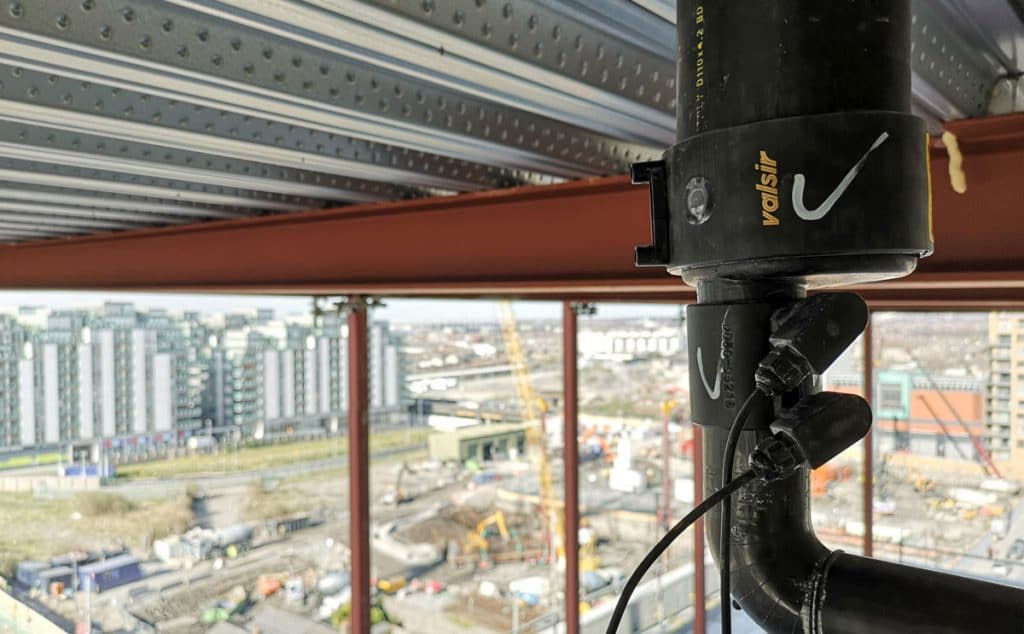
A siphonic roof drainage system is a bespoke, engineered rainwater solution that uses controlled negative pressure to remove water quickly from the roof. Specially designed outlets and baffle plates limit air entry so the pipework can run full-bore. As rain falls, rainwater is drawn rapidly through smaller diameter pipes that can run horizontally at zero falls, within the building before dropping to a small number of strategically located downpipes.
Because the system is hydraulically designed around local rainfall intensity and roof geometry, a siphonic rainwater system can handle large volumes of water efficiently on flat and low‑gradient roofs while using less pipework than a traditional gravity system. All while providing far greater protection against extreme weather events than a traditional gravity system.
Why Choose Siphonic Instead of Gravity?
Compared with conventional gravity roof drainage, well‑designed siphonic systems typically offer:
- Reduced pipework and simplified coordination due to horizontal pipework being installed at zero falls.
- Fewer downpipes and less underground drainage, simplifying coordination and lowering civil costs.
- Smaller pipe diameters with higher velocities lead to a self-cleansing system, which is much easier to coordinate with other services.
- Typical cost savings of 20–45% compared with conventional gravity‑based systems, with typical raw material reduction in excess of 65%.
- Greater design freedom for architects and engineers, with fewer roof penetrations and more options for routing around structure and services.
- An excellent partner for rainwater harvesting and reuse, as roof drainage can be routed directly to storage or treatment systems.
Typically, for large commercial, residential and industrial roofs, a siphonic rainwater drainage system provides a more efficient, space‑saving, sustainable and cost‑effective solution than a purely gravity‑based approach.
If you would like a siphonic versus gravity comparison for a specific roof, contact us with your drawings and design criteria and we can advise on the best approach.
Additional Protection Against Extreme Weather Events
As extreme weather events become more frequent and intense, the resilience of rainwater drainage systems is critical to maintaining uptime. Siphonic drainage systems are increasingly important because they:
- Remove large volumes of stormwater during high-intensity rainfall events.
- Reduce the risk of roof ponding, structural overload and internal water ingress.
- Support compliance with evolving rainfall data and design storm criteria.
- Provide long-term protection for assets in regions experiencing changing climate patterns.
- Decrease reliance on secondary overflow systems when extreme weather occurs.
Capcon Are The Siphonic Specialists
Capcon has spent more than 15 years focused on rainwater drainage. Over that time, we have delivered engineered siphonic and gravity systems on projects ranging from breweries and stadia to advanced manufacturing, pharmaceutical facilities and major digital infrastructure projects across Ireland, the UK and internationally.
Expertise and track record
Our team has designed and delivered siphonic drainage solutions on many complex, high‑profile projects, including:
- Multiple Data Centres throughout Europe and Asia
- Major pharmaceutical facilities in Singapore, France, Italy, Ireland and beyond
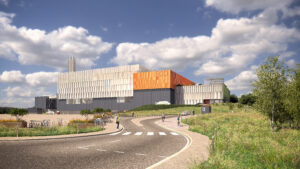
- Ireland’s first carbon‑neutral brewery
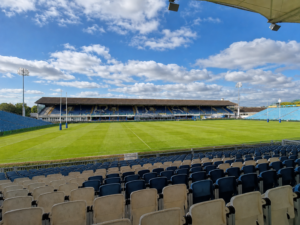
- The RDS Anglesea Stand in Dublin and Dexcom Stadium Galway
- Terminal 5 Changi Airport, Singapore
On each project, we work closely with architects, engineers and contractors to ensure the siphonic system integrates seamlessly with the roof build‑up, structural framing and internal services, while meeting design storm criteria and client performance requirements.
Excellence in Design and Production
All siphonic systems are designed by our in‑house engineering team and are in line with all relevant local codes and standards, including BS EN 12056‑3, BS 8490, VDI 3806, DIN 1986, ASPE/ANSI 45, SS525:2024, among many others. Through our global reach, we can always ensure every system we design complies with all local codes and standards. Our designers use best‑practice tools, including 2D and 3D BIM modelling, to coordinate outlet locations, collector pipes and downpipes with the wider building design.
Where appropriate, we prefabricate our systems off-site under factory‑controlled conditions. This helps to improve dimensional accuracy, reduce waste and shorten installation time compared with purely site‑based fabrication.
Capcon’s design and production capabilities cover gravity, rainwater harvesting, and siphonic drainage systems, allowing us to engineer the most suitable solution for each project rather than forcing a single approach.
Multi‑Brand Siphonic System Expertise
Our rainwater specialists are trained, certified and experienced in designing and installing siphonic systems from leading manufacturers, including Valsir Rainplus®, Hydromax® and Blucher® stainless-steel siphonic systems, among many others. Being manufacturer-agnostic allows us to work with the technologies that best fit each project’s requirements and client preferences, while ensuring we have a system suitable for use in every country we work in.
Installation, Maintenance and Upgrades
Capcon’s specialised teams are trained and experienced in the installation of siphonic pipework, outlets and associated components. Working from detailed design and fabrication drawings, we coordinate closely with roofing, structural, civil and M&E trades to keep installations safe, efficient and aligned with programmes.
We also offer a range of professional maintenance options for siphonic systems, including:
- Planned preventative maintenance programmes
- Specific repairs and survey services
- Emergency call‑outs where necessary
- Roof rainwater monitoring
- Debris removal and clean out
Older siphonic drainage systems, particularly those installed before modern standards and rainfall criteria were established, may no longer provide adequate capacity. Our engineers can review existing installations and advise on cleaning, remedial works or upgrades to improve performance and resilience.
Where siphonic roof drainage works best
Siphonic roof drainage systems are particularly well‑suited to large roofs where conventional gravity systems would require numerous outlets, downpipes and underground runs, such as:
- Industrial, logistics and storage buildings
- Data centres and technology facilities
- Breweries, food and beverage plants and processing facilities
- Stadia, arenas and large spectator stands
- Retail, distribution and other large‑format commercial roofs, such as airports
Each siphonic rainwater system is custom‑designed around the building’s use, location, roof geometry and discharge requirements, ensuring that roof drainage performance aligns with local meteorological data and also the building design life.
How Siphonic Drainage Systems Work – in Brief
Siphonic drainage systems are engineered to prevent air from entering the downpipes during intense rainfall. As rain depth builds at the outlet, baffle plates restrict air and allow the pipework to run full bore. Once the system primes, negative pressure develops in the vertical and horizontal sections of pipework, pulling water rapidly from the roof.
At low rainfall levels, the system behaves much like a traditional gravity system. As rainfall intensity increases and the system reaches design conditions, the siphonic effect takes over, delivering:
- Higher flow rates through smaller pipe sizes
- Full‑bore flow through the pipework
- Self‑cleansing velocities that help to keep pipework clear
Because the pipework can be routed horizontally without a gradient, siphonic systems offer significantly more flexibility in routing and coordination than conventional gravity drainage.
How we Support Different Project Stakeholders
Architects and design teams
We support architects and design teams from the early stages of the project to:
- Assess whether a siphonic roof drainage system is appropriate for the building.
- Optimise outlet locations and pipe routes to work with the structural grid and other services.
- Reduce the visual impact of drainage on façades and internal spaces by minimising visible downpipes and penetrations.
- Compare siphonic and gravity options for challenging roof geometries, limited ceiling voids or high architectural ambitions.
- Ensure compliance with relevant standards and site-specific performance criteria.
If you are at the concept or planning stage, we can review outline drawings and discuss how siphonic drainage might help to unlock your design or reduce coordination clashes. The Capcon team have experience assisting design teams from RIBA stage 1 right through to stage 7.
Main and M&E Contractors
For contractors, our focus is on safe, predictable delivery and minimising on-site risk. We:
- Provide buildable siphonic designs that are coordinated with structure and services.
- Offer prefabricated pipework where appropriate to improve quality and reduce on‑site labour.
- Work with site teams to sequence installation efficiently and safely.
- Coordinate closely with M&E and structural teams to avoid service clashes and ensure smooth integration with other building systems.
- Support testing, commissioning and handover of the complete siphonic drainage system.
We are happy to review tender drawings and specifications and propose siphonic options or value engineering where appropriate.
M&E Consultants and Specifiers
For consulting engineers and specifiers, we provide:
- Early-stage coordination with architects, structural and MEP teams to ensure the rainwater strategy integrates seamlessly with the overall building design.
- Full hydraulic design and calculation packs for siphonic roof drainage systems.
- Design verification and checking of third‑party siphonic schemes.
- Technical support on system selection, design assumptions and integration with gravity or rainwater harvesting systems.
- CPD‑certified training on siphonic drainage fundamentals, advantages, limitations and real‑world applications.
Our CPD “An Introduction to Siphonic Drainage” is approved by Engineers Ireland and certified by CPD UK, and can be delivered virtually or in person to project teams and design practices.
If you would like us to review a siphonic design, compare siphonic and gravity options, or discuss an existing on-site system, please contact us, and our team will get back to you promptly.
Siphonic Drainage FAQs
When correctly maintained, siphonic systems are less prone to blockages than conventional gravity systems. High velocities help keep the pipework clean, and most issues arise when outlets are obstructed by debris or components are disturbed during roof works. Regular inspection and cleaning of outlets and gutters remain critically important for the long term performance of any roof drainage system.
In some cases, a gravity system can be upgraded to siphonic, but it requires careful assessment of roof layout, outlet positions, pipe sizes and discharge locations. Our engineers can review drawings or carry out surveys to advise whether a siphonic upgrade is feasible, and what modifications would be required to meet current design criteria and standards.
Siphonic systems require routine inspection and maintenance, particularly at outlets and leaf guards. We generally recommend planned inspections and cleaning, along with checks after major roof works or severe weather events. The goal is to ensure outlets remain clear, baffle plates and guards are in place, and the system can still prime correctly when required.
Siphonic drainage is most effective on larger roof areas where pipework can be routed efficiently to discharge points. On very small or highly fragmented roofs, a gravity or hybrid gravity–siphonic solution may be more appropriate. During early design, we can help you evaluate which approach best fits the roof geometry, risk profile and budget.
Speak to a Siphonic Drainage Specialist
If you would like to explore siphonic drainage on an upcoming project or need support with an existing system, our team is ready to help.
For tender enquiries, design reviews or maintenance support, please contact our Estimating Team or complete our Tender Enquiries form, and we will get back to you promptly.
European Head Office: +353 1 651 0302
UK Office: +44 1 494 853 020
APAC Regional Office: +6012 385 1975
Siphonic Roof Drainage Experts
Meet Donnacha Tobin
Find out how we can design and supply a bespoke siphonic drainage solution for your next project by speaking directly with our Divisional Director.