Built in Ireland, Trusted Worldwide: How Capcon Is Scaling Its Rainwater Expertise

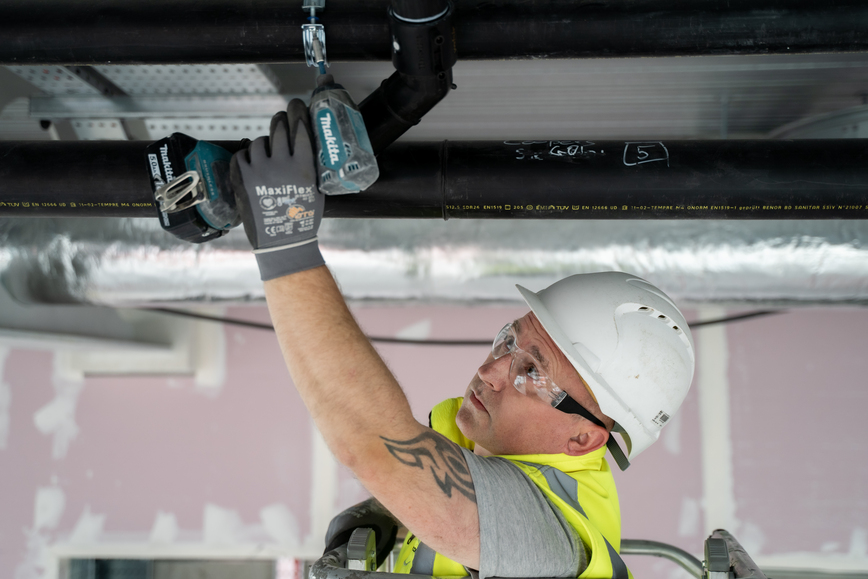
Installing rainwater drainage

Rainwater drainage has historically been downplayed — specified late, resolved quickly and rarely revisited. That approach has quickly become impractical. The combination of climate volatility, tightening regulatory frameworks and the rapid pace of infrastructure development means that rainwater management is now an integral building consideration.

Today, getting a rainwater management strategy right will largely determine how a structure is prepared for climate events over the decades to come. Capcon Engineering has grown around the principle of turning a vulnerability like rainwater into value that will last the lifetime of a building, and the world is starting to see this value.

Installing rainwater drainage

Built on Specialist Expertise

Capcon Engineering was founded on an unconventional premise: that rainwater management deserved to be treated as a standalone specialist discipline, not a line item resolved at the end of a broader MEP package. That decision stemmed from an understanding of the nuances of rainwater drainage, and an outlook on the potential siphonic drainage had in the industry.

Capcon began its journey over 15 years ago in Ireland, quickly establishing a reputation for precision and technical depth in drainage design across large-scale commercial projects. The need for that specialist capability grew — and so did Capcon’s focus. The company became one of only a small number of specialist providers of siphonic drainage in the market, earning the trust of design teams and contractors on some of the most technically demanding projects in the country.

That reputation didn’t stay within Ireland for long. As the scale and complexity of projects grew, so did Capcon’s international footprint — today spanning 15+ markets across Europe, the UK and the Asia-Pacific region, serving sectors as varied as data centres, airports, pharmaceutical facilities, stadiums and large-scale commercial developments. In every market, design is led by the same principle: solutions built around the specific demands of the building, always compliant with local standards and always manufacturer-agnostic.

“Rainwater management strategy was going to become a much bigger part of the picture — we recognised that early and committed to it fully,” says Eugene Finn, Managing Director. “The depth of expertise our team has built over many years is what has allowed us to take on the most technically demanding projects across the world.”

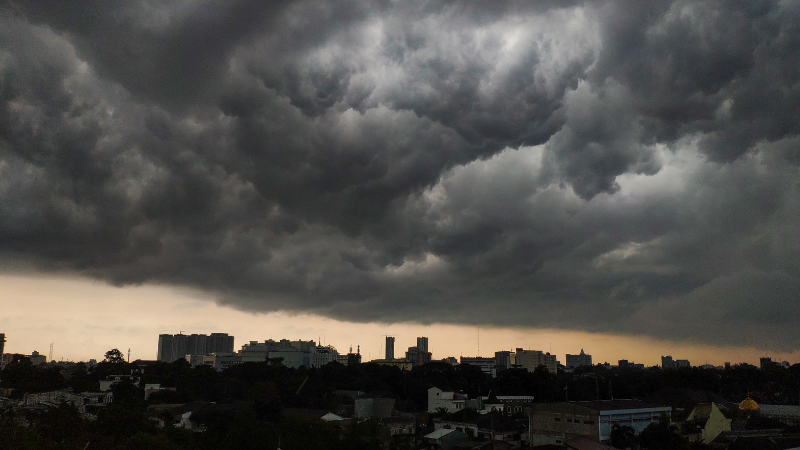
Rain Storm Over City

A Universal Challenge — And the Expertise to Face It

Behind every Capcon project is a team that brings valuable knowledge and skill to the table. Capcon’s engineers and technical specialists are trained to understand the full climatic and hydraulic context of each project they work on — what the local rainfall environment looks like, how it is changing and what that means for a building designed to perform over decades.

Rainwater management at the level Capcon operates at demands a rare combination of hydraulic engineering, climate awareness and construction experience — and that combination can take years to establish. Some of Capcon’s designers have been with the company for over a decade, building an unparalleled depth of specialist knowledge in rainwater drainage design that the complex projects require.

Tracking live rainfall figures across 15 cities, every system Capcon specifies is calibrated to the full climatic and hyrdraulic context of its location, actual and projected rainfall conditions and compliant with local standards.

Circular economy sustainability concept

More Than Drainage — A Full Rainwater Strategy

The distinction Capcon makes, and the one that defines its commercial position, is between solving a drainage problem and delivering a rainwater strategy. They are not the same.

A comprehensive rainwater strategy differs from solving a drainage problem by asking the questions: what rainfall intensity does this building face today and over its design life? What are the structural, operational and environmental consequences of getting that wrong? How does the drainage system integrate with the building’s mechanical and electrical services, its architectural constraints and its sustainability objectives?

Capcon’s answer to those questions begins with hydraulic modelling calibrated to local meteorological data and 1-in-100-year event parameters, with explicit adjustments for projected climatic change. It extends to the selection of system type — siphonic, gravity or hybrid — based on the specific demands of the project, covering the full lifecycle: prefabrication, design, supply, installation and maintenance.

The siphonic systems Capcon specialises in are engineered for peak-flow conditions. By creating a negative pressure that draws water off the roof at high velocity through fully charged pipework, they handle concentrated, high-intensity rainfall events of the kind now arriving with greater frequency across every market Capcon serves. They also require fewer downpipes, smaller-diameter pipework and no falls — reducing co-ordination demands, freeing ceiling void space, and typically delivering a total installed cost that’s 20–40% below equivalent conventional systems.

Working at Scale

The range of Capcon’s project portfolio reflects how consistently that strategy translates across geographies and sectors.

Singapore Changi Airport Terminal 5 aerial view

Changi Airport Terminal 5, Singapore

One of the most ambitious aviation infrastructure projects in the world, Terminal 5 at Changi Airport operates in a climate where rainfall intensity is among the highest of any city in Capcon’s data set. Capcon’s role as independent drainage consultants — working within the complex geometrical and aesthetic constraints of a landmark building designed by KPF, Heatherwick Studio and architects61 — displays the kind of technically demanding work that now defines the company’s global practice.

Modern data centre exterior building

Data Centre, Berlin, Germany

A pitched roof design with conventional external gravity drainage had pushed the building beyond its permissible height, once roof-mounted plant was factored in — a constraint that, left unresolved, would have forced a reduction in data hall capacity. Capcon proposed a flat roof solution served by a siphonic system, removing the need for the falls a gravity system would have required. Drainage outlets were positioned above service corridors, routing rainwater away from data halls and critical infrastructure entirely, resolving the height constraint without compromising the performance of the building.
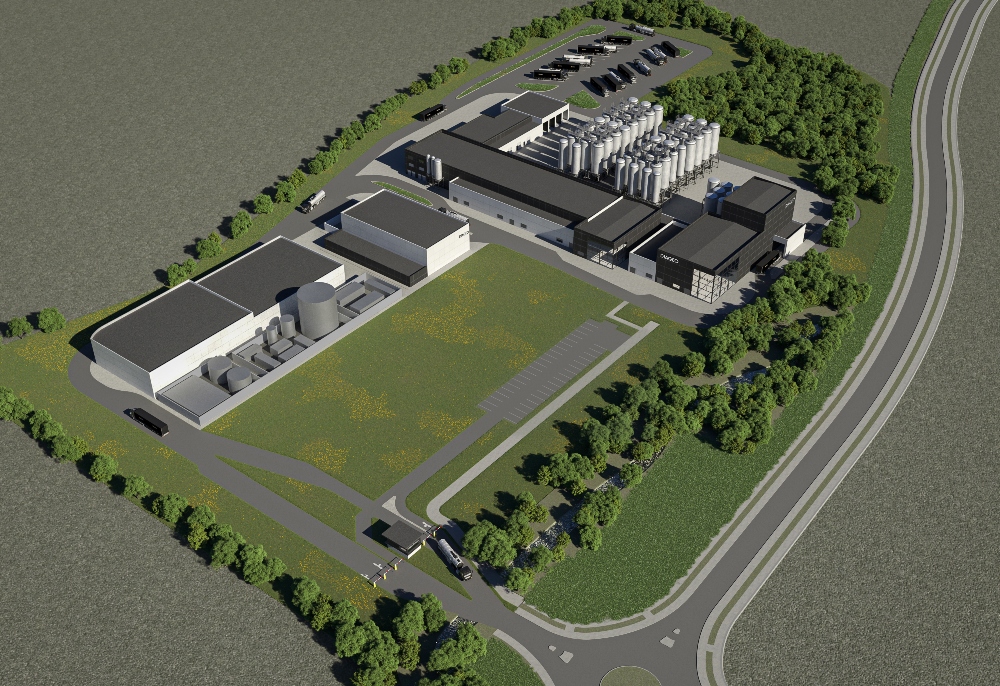
Diageo brewery project drainage

Diageo Brewery, Co. Kildare, Ireland

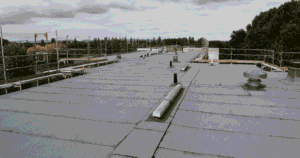
Ireland’s first carbon-neutral brewery required a drainage solution that was as considered as the building itself. Capcon’s design encompassed over 700 metres of pipework and 47 roof drainage outlets, with all connections directed to pop-up points to preserve the clean architectural profile of the flat roof — an outcome that required close co-ordination between drainage performance and architectural intent from the earliest design stages.

What's Next

The forces that have driven Capcon’s growth are not easing. Climate volatility is rightly embedding itself into building codes and ESG frameworks in ways that will make early-stage drainage strategy a standard requirement. The scale and critical nature of the infrastructure Capcon serves — data centres, airports, pharmaceutical facilities, large-scale commercial and industrial developments — leave unprecedented opportunity for supporting climate resilience measures.

Working across 15+ markets in Europe, the UK and the Asia-Pacific region, Capcon brings accumulated rainfall data, specialist hydraulic modelling expertise and experience across a wide variety of project types to every project. For clients navigating increasingly complex climate challenges, that breadth of experience is essential to protecting assets in the decades ahead.

Looking for specialist rainwater management for your next project? Contact the team below.

CONTACT

Eugene Finn

Managing Director

Eugene Finn Capcon Engineering Managing Director