The world is facing a water challenge, but it isn’t one of supply. It’s one of management, and the key decisions we make at the design stage.
The total amount of water on Earth has remained essentially constant over geological time. Water doesn’t just disappear; it moves through a constant cycle. Only a tiny fraction is available as accessible freshwater at any given moment. And more and more, in the built environment, that water arrives in the wrong volume, at the wrong time and in the wrong place.
Ireland is a perfect example. We receive some of the highest levels of rainfall in Europe, with annual averages ranging upwards of 1,000 mm. Yet despite this abundance, buildings and infrastructure in Ireland and across Europe continue to experience flooding, overwhelmed drainage systems and water damage during intense rainfall events.
The problem we are facing isn’t that we lack water. It’s that our buildings and cities often aren’t designed to capture, manage and move it effectively when it arrives.
That paradox is playing out here in Ireland currently. This July 2026, Uisce Éireann introduced a six-week hosepipe ban across Dublin and neighbouring counties, not for lack of rain but because of routing issues and legacy infrastructure causing leakages. Ireland reportedly lost 36% of its treated water through leakage in 2024, compared to the EU average of 23%.

The way we’ve dealt with water
The challenge is not only that many structures have naturally aged out of the capacity for rainfall levels previously expected. We’ve also built our cities to prevent natural absorption, designing buildings to expel water as quickly as possible and installing systems that extract groundwater faster than it can be replenished. We are now facing that our infrastructure is no longer equipped to deal with today’s intensified rainfall events and stretched drought periods between them.
We’ve engineered a world that treats water as something to be rid of, and not a resource to be managed and conserved.
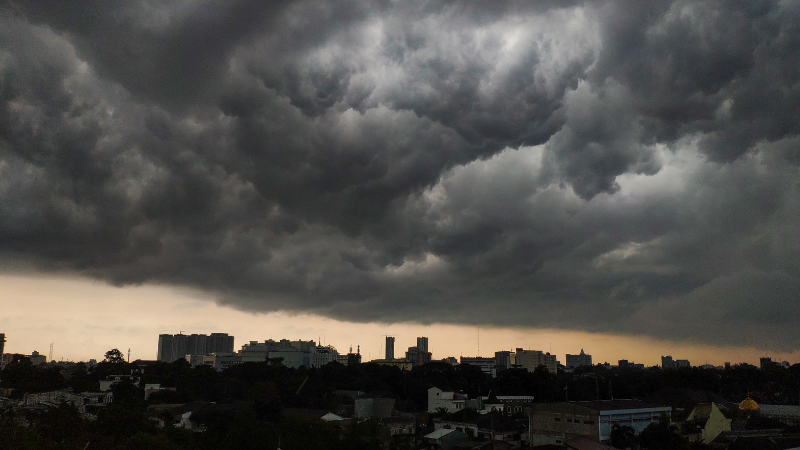
Why we need better water management
Rainwater harvesting is often framed as a sustainability add-on. A box to tick. A gesture toward green credentials.
It’s more than that, but only when it’s paired with the right drainage strategy upstream.
This is where siphonic drainage is significantly changing the way buildings recover and redistribute water.
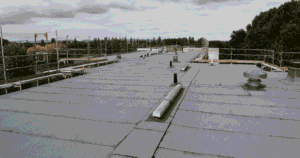
By operating at full-bore flow, siphonic systems rapidly remove large volumes of water from roofs, reduce pipework and material requirements and create the controlled, predictable conditions that make harvesting viable at scale. Siphonic systems also use up to 70% less raw material than traditional drainage approaches.
Without that control, harvesting becomes inconsistent and inefficient. The drainage design isn’t a separate consideration; it’s the foundation.

Rainwater management as a strategy
At a building level, rainwater harvesting can look modest. But across large-scale developments in data centres, life sciences, and industrial facilities, the combination of siphonic drainage and intelligent capture becomes an infrastructure strategy: water is collected efficiently, peak flows are controlled and a reusable supply is available for non-potable demand.
For decades, buildings have been designed to remove rainwater as quickly as possible, and that remains essential, but it is no longer enough. Now that water has become an increasingly valuable resource, buildings need to do more than simply discharge it — they need to manage it strategically.
The future of rainwater management
Siphonic drainage provides the rapid, high-capacity removal needed to protect buildings during extreme rainfall. Together with rainwater harvesting, these systems transform rainwater from a potential threat into a valuable asset. These features will inevitably be essential for buildings to successfully navigate climate change and fluctuating water demand.
The future won’t be defined by how we remove the threat of water from our buildings.
It will be defined by how intelligently we manage it. And the starting point isn’t at ground level —
it’s at the roof.