Capcon Engineering designs, supplies, installs and maintains complete siphonic roof drainage systems for new builds and refurbishments across Malaysia, and for more than 15 years we have helped architects, main contractors and M&E consultants take rainwater off large roofs without surrendering ceiling void space or programme time. From the first concept sketch to handover, you deal with one specialist team based in Kuala Lumpur.
Working on a live project? Send us your tender drawings or outline brief via our contact page, and our siphonic drainage experts will review the options with you.
What is Siphonic Drainage?
Siphonic drainage is an engineered rainwater system in which purpose-made roof outlets keep air out, so the pipes fill completely and negative pressure pulls water off the roof at speed. Because those pipes can run level at zero fall, they need far less depth overhead than gravity drainage, and you can read how siphonic drainage works in full on our main service page.
Why does this matter so much in Malaysia? Because the system is hydraulically designed to account for local rainfall intensity and roof geometry. Kuala Lumpur sits squarely in the tropics, classified as a tropical rainforest climate under the Koppen system, and receives approximately 2,500 to 3,000 mm of rainfall annually.
Why Choose Siphonic Instead of Gravity in Malaysia?
On Malaysian projects, three advantages tend to decide the argument:
- Level pipework for tight ceiling voids: collector pipes run at zero fall, so they sit above the ceilings of Klang Valley towers and heavily serviced plants without fighting ductwork and cable trays for every millimetre of depth.
- Fewer risers, fewer M&E clashes: a handful of carefully placed downpipes replaces dozens, which means fewer vertical routes to coordinate, shorter below-ground runs through soft Selangor soils and less resequencing on busy Johor sites.
- Typical cost savings of 20 to 45% compared with conventional gravity-based systems.
Send us the drawings for a specific roof and we will set out a siphonic versus gravity comparison, including what each option means for your coordination and programme.
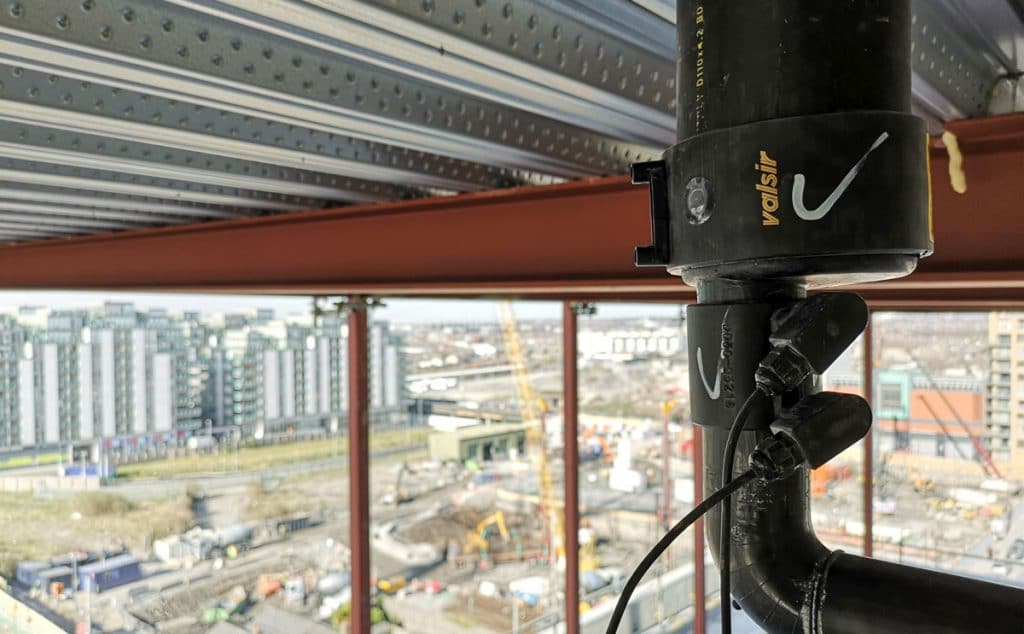
Additional Protection Against Extreme Weather Events in Malaysia
Malaysia does not lack for rainfall. Kuala Lumpur alone averages around 200 rainy days per year, and the intensity of those rain events is trending upwards. The devastating Klang Valley floods of December 2021, described as the worst in 50 years, displaced tens of thousands of people across Shah Alam, Hulu Langat and parts of KL itself. The SMART Tunnel, purpose-built to divert floodwater away from Kuala Lumpur’s city centre, has had to activate its full flood-diversion mode multiple times, including diverting five million cubic metres of water during the 2021 events alone.
These are not isolated incidents. Flash flooding has become a near-annual occurrence across Malaysia’s rapidly urbanising areas. For buildings with large roof areas, inadequate drainage is not just an inconvenience. It is a serious operational and financial risk.
Siphonic drainage systems are increasingly important in Malaysia because they:
- Remove large volumes of stormwater during high-intensity rainfall events, the kind of tropical downpours where conventional gravity systems simply cannot keep pace.
- Reduce the risk of roof ponding, structural overload, and internal water ingress, thereby protecting the high-value assets housed within data centres, pharmaceutical plants, manufacturing facilities, and commercial developments.
- Support compliance with evolving design storm criteria and the requirements of the MSMA (Manual Saliran Mesra Alam Malaysia), the Department of Irrigation and Drainage’s urban stormwater management manual that governs drainage design across Malaysia.
- Provide long-term protection for assets in a climate where rainfall intensity is projected to increase further under climate change scenarios.
- Decrease reliance on secondary overflow systems during extreme weather events.
Capcon Are the Siphonic Specialists
Rainwater drainage is all Capcon does, and has been for more than 15 years, on pharmaceutical plants, data centres, airports and advanced manufacturing sites across Ireland, the UK, Europe, the Middle East and Asia-Pacific.
We have a physical presence in Kuala Lumpur, with our APAC office at L12-6 Menara Sentral Vista. We are not a distant consultancy offering remote advice from another continent. We are here, embedded in the Malaysian market, working alongside local teams and understanding the specific challenges of building in this climate and regulatory environment.
Expertise and Track Record in Malaysia and APAC
Our team has designed and delivered siphonic drainage solutions on complex, high-profile projects, including:
- Pharmaceutical facilities across Asia, including projects for major global manufacturers in Singapore, France, Italy and Ireland, where the demands for precision coordination in heavily serviced buildings mirror exactly the challenges facing Malaysia’s growing pharmaceutical sector. AstraZeneca’s recently announced USD 1.5 billion manufacturing facility in Singapore underscores the scale of investment flowing into pharmaceutical production across the region.
- Multiple data centres across Asia and Europe, designed to meet the stringent uptime, sustainability, and water-efficiency requirements operators demand. This experience is directly relevant to the data centre construction wave now transforming Johor and the wider Klang Valley.
- Changi Airport Terminal 5, Singapore, where construction began in May 2025 on a mega terminal handling approximately 50 million passengers annually. Vast roof areas and complex architectural designs make siphonic drainage the natural choice for projects of this scale.
- Advanced manufacturing and industrial facilities across the region, where siphonic systems deliver the combination of performance, space efficiency and cost savings that complex industrial buildings require.
On each project, we work closely with architects, engineers and contractors to ensure the siphonic system integrates seamlessly with the roof build-up, structural framing and internal services, while meeting design storm criteria and client performance requirements.
Excellence in Design and Production
All siphonic systems are designed by our in-house engineering team in line with all relevant local codes and standards. For Malaysian projects, this includes compliance with the Uniform Building By-Laws 1984 (UBBL), specifically By-law 115, which covers roof drainage and rainwater harvesting (SPAH) requirements. We also design in accordance with the MSMA stormwater management requirements of the Department of Irrigation and Drainage (JPS) and reference international standards, including BS EN 12056-3, BS 8490, and ASPE/ANSI 45, where project specifications require it.
Malaysia’s regulatory framework draws heavily on British standards, and with good reason. The engineering rigour they demand aligns well with the challenges of designing drainage for tropical rainfall intensities. Our team brings deep familiarity with both the BS EN framework and Malaysian local requirements, ensuring every system we design is compliant and fit for purpose.
Our hydraulic calculation packs are prepared to BS EN 12056-3 and BS 8490, with ASPE/ANSI 45 applied where an international client’s specification asks for it. Outlets, collectors and downpipes are modelled in 2D and 3D BIM so clashes get resolved on screen rather than on site, and where it suits the programme we prefabricate pipework off-site, which cut on-site labour time by approximately 20% on past pharmaceutical projects. We are trained and certified on Valsir Rainplus, Hydromax and Blucher stainless-steel systems, among others, so the product is chosen to suit your building rather than a single supplier’s catalogue.
Installation, Maintenance and Upgrades
Capcon’s own crews install the pipework and outlets from coordinated fabrication drawings, working alongside the roofing, structural and M&E trades so the drainage package keeps pace with the wider programme. Heavy organic debris from surrounding vegetation, high humidity encouraging biological growth, and the sheer frequency and intensity of rainfall events all mean that regular inspection and cleaning are not just advisable but essential. Planned maintenance, surveys, emergency call-outs and upgrades for older systems are all set out on our siphonic drainage service page.
Where Siphonic Roof Drainage Works Best in Malaysia
Siphonic roof drainage systems are particularly well-suited to the types of large-footprint buildings driving Malaysia’s construction growth:
- Data centres and technology facilities: Malaysia’s data centre market was valued at approximately USD 4 billion in 2024 and is projected to exceed USD 13.5 billion by 2030. Johor alone has approved 42 data centre projects worth RM164.45 billion, and the Johor-Singapore Special Economic Zone is accelerating cross-border investment. These facilities demand absolute reliability in rainwater management. Water ingress can shut down operations and cost millions.
- Pharmaceutical and advanced manufacturing: Malaysia’s pharmaceutical market is experiencing strong growth, and the government’s focus on biomedical manufacturing through Economic Development Board initiatives is attracting significant investment. These are exactly the kinds of congested, high-value, precision-engineered buildings where siphonic drainage outperforms gravity alternatives.
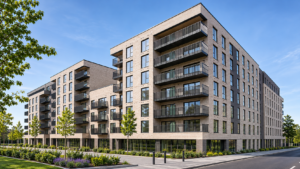
- Commercial developments and high-rise towers: Kuala Lumpur’s evolving skyline and the development boom across Johor Bahru, Cyberjaya and Penang are producing large-footprint commercial buildings where siphonic systems deliver real savings in coordination time, material costs and usable floor area.
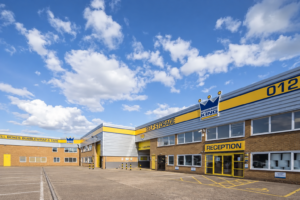
- Industrial, logistics and warehousing buildings: Malaysia’s industrial estates across Selangor, Johor and Penang house vast single-storey and multi-storey facilities where reducing the number of downpipes and underground drainage runs translates directly into lower construction costs.
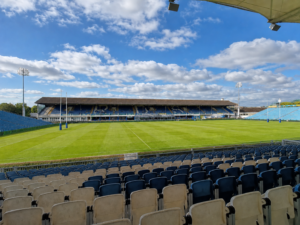
- Airports and transportation infrastructure: Large roof spans and complex architectural requirements make siphonic systems the natural choice for aviation and public transport facilities.
Each siphonic rainwater system is custom-designed around the building’s use, location, roof geometry and discharge requirements, ensuring that roof drainage performance aligns with Malaysian meteorological data and MSMA design storm criteria.
Supporting Malaysia's Sustainability and Water Management Goals
Malaysia takes stormwater management seriously, and the regulatory framework is catching up with the scale of the challenge. The MSMA, published by the Department of Irrigation and Drainage (JPS), requires new developments to implement on-site detention measures to reduce peak stormwater flows into the public drainage network. The UBBL has been amended to include By-law 115, which specifically addresses roof drainage, rainwater harvesting, and utilisation systems (SPAH).
Siphonic drainage fits naturally into this framework. By efficiently channelling roof runoff into attenuation tanks, detention systems, or rainwater-harvesting storage, siphonic designs support compliance with MSMA requirements while helping developers achieve Green Building Index (GBI) certification. The GBI, developed specifically for Malaysia’s tropical climate and context, awards credits for water efficiency measures, including rainwater harvesting and reduced mains water consumption. GreenRE certification, increasingly used for residential and commercial developments, has similar requirements.
For data centres in particular, where cooling demands make water a critical operational resource, pairing siphonic drainage with rainwater harvesting can directly improve water efficiency metrics. As Malaysia’s Green Data Centre guidelines evolve to match the scale of investment flowing into the sector, demonstrating strong water management credentials will only become more important.
How We Support Different Project Stakeholders in Malaysia
Architects who involve us early can test siphonic against gravity for their roof geometry and fix outlet positions around the structural grid before the ceiling void depth is locked in, which keeps downpipes off feature facades. Main and M&E contractors get buildable, clash-checked designs and prefabricated pipework that lean less on scarce skilled site labour and help protect handover dates on fast-moving Klang Valley and Johor programmes. M&E consultants and specifiers can rely on us for full hydraulic calculation packs, independent checks of third-party siphonic schemes and a rainwater strategy coordinated with UBBL, MSMA and GBI requirements.
Our CPD “An Introduction to Siphonic Drainage” is approved by Engineers Ireland and certified by CPD UK, and can be delivered virtually or in person to project teams and design practices in Malaysia.
Contact Our Kuala Lumpur Office
Capcon Engineering has a dedicated APAC office in Kuala Lumpur to serve projects across Malaysia and the wider region:
Capcon Engineering, Malaysia
L12-6 Menara Sentral Vista, Kuala Lumpur
Phone: +6012 385 1975
Email: info@capconeng.com
Whether you are at the tender stage, early design or looking to upgrade an existing system, get in touch with your drawings and design criteria. Our siphonic drainage specialists will review the options and advise on the best approach for your project.
Siphonic Roof Drainage Experts
Meet Donnacha Tobin
Find out how we can design and supply a bespoke siphonic drainage solution for your next project by speaking directly with our Divisional Director.