Every large roof in Thailand shelters something expensive: production lines, server halls, stock, a tenant’s fit-out. Capcon Engineering takes Thai new builds and refurbishments from first drainage concept to a maintained, working siphonic system, with support from Kuala Lumpur and Singapore. We have spent over 15 years helping design teams, main contractors and M&E consultants keep the rain on the outside of buildings like these.
Working on a live project? Send us your tender drawings or outline brief via our tender page, and our siphonic drainage experts will review the options with you.
What is Siphonic Drainage?
A siphonic system is a hydraulically calculated roof drainage network in which purpose-made outlets keep air out of the pipes, so they fill completely and negative pressure pulls rainwater off the roof far faster than gravity could. Because that pull needs no gradient, level collector pipes can carry the water across the building to a handful of downpipes, and the full siphonic drainage explanation sits on our UK and Ireland page.
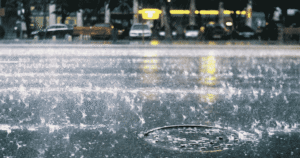
Why does this matter in Thailand? Because the system is hydraulically designed around local rainfall intensity and roof geometry, and Thai rain is anything but gentle. Bangkok receives about 1,700 mm of rain a year on the 1991 to 2020 normals, with the rainy season arriving on the southwest monsoon around mid-May and running until October. September is the wettest month, averaging close to 336 mm.
Much of it falls as heavy showers and thunderstorms rather than steady drizzle. A siphonic rainwater system handles those tropical downpours efficiently on flat, low-gradient roofs while requiring less pipework than a traditional gravity system, and gives far greater protection against the extreme rainfall events Bangkok has seen in recent years.
Why Choose Siphonic Instead of Gravity in Thailand?
In our view, drainage in Thailand should be judged by what it protects as well as what it costs, and siphonic systems do well on both counts:
Less pipe above sensitive space: Smaller, level collectors mean fewer runs and joints crossing the ceiling voids over Thai data halls, clean rooms and production lines, where a single leak can stop the operation below.
Fewer drops and underground runs: On a sprawling Eastern Economic Corridor factory or warehouse, cutting downpipes and below-ground drainage leaves fewer points where a blockage can push water back into the building.
Typical cost savings of 20 to 45% compared with conventional gravity-based systems.
Share a roof plan and your design criteria, and we will compare both approaches for that roof, including where each one leaves your building exposed.
Additional Protection Against Extreme Weather Events in Thailand
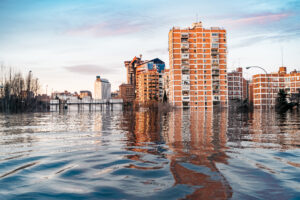
Thailand knows what happens when water has nowhere to go. The 2011 floods lasted 175 days, affected 13.6 million people and left 65 of the country’s 77 provinces declared disaster zones. Around 930 factories in 28 provinces flooded, and the World Bank put the losses at 1.425 trillion baht (US$46.5 billion). That was a river flood, not a roof drainage failure. But it taught every Thai factory owner how expensive water in the wrong place can be.
Short, violent cloudbursts are a different, more frequent problem. On 3 November 2025, Lak Si recorded 131.5 mm of rain, while Bangkok’s Governor said the city’s drainage system is designed to handle up to 60 mm. Then, in late September 2026, up to 210 mm fell in 24 hours at a station in Chatuchak.
The longer trend points the same way. A study of Thai rainfall from 1955 to 2019 found a significant increase in heavy rainfall events, and estimated that another half-degree of warming could bring almost 50% more of them. For a building with a large roof, that is a design problem, not a forecast.
Siphonic drainage systems are increasingly important in Thailand because they:
- Remove large volumes of stormwater during high-intensity rainfall events, the monsoon cloudbursts where conventional gravity systems struggle to keep pace.
- Reduce the risk of roof ponding, structural overload and internal water ingress, protecting the high-value assets housed in data centres, electronics plants, warehouses and commercial developments.
- Move water off the roof quickly and into on-site attenuation where the site allows, so the building depends less on a public network that can be overwhelmed.
- Provide long-term protection for assets in a climate where heavy rainfall events are becoming more frequent.
- Decrease reliance on secondary overflow systems during extreme weather events.
Capcon Are the Siphonic Specialists
Capcon has worked only on rainwater drainage for more than 15 years, on buildings that range from Irish pharmaceutical plants and Dublin data centres to Changi Airport Terminal 5.
We serve Thailand from our APAC offices in Kuala Lumpur and Singapore. Bangkok is a little over two hours’ flight from either city, roughly 1,220 km from Kuala Lumpur, so our engineers travel to site for surveys, design workshops, installation supervision and commissioning. Hydraulic design and BIM coordination are carried out remotely, alongside your local architects, consultants and contractors. Close enough to be on site when it matters.
Expertise and Track Record Relevant to Thailand
Our team has designed and delivered siphonic drainage solutions on complex, high-profile projects, including:
- Pharmaceutical facilities in Singapore, alongside projects for major global manufacturers in France, Italy and Ireland. That precision coordination is exactly what Thailand’s high-tech plants require.
- Data centres across Asia, including Johor, Malaysia, designed to meet stringent uptime and water-efficiency requirements. That experience is directly relevant to the hyperscale campuses now rising around Bangkok, Chonburi and Rayong.
- Changi Airport Terminal 5, Singapore, a mega terminal now under construction, where vast roof areas make siphonic drainage the natural choice. The same logic applies to Thailand’s airport expansions.
- Advanced manufacturing and industrial facilities across Europe and APAC, where siphonic systems deliver the performance, space efficiency and cost savings complex industrial buildings require.
On each project, we work closely with architects, engineers and contractors to ensure the siphonic system integrates seamlessly with the roof build-up, structural framing and internal services, while meeting design storm criteria and client performance requirements.
Excellence in Design and Production
Every Capcon calculation follows BS EN 12056-3, BS 8490 and ASPE/ANSI 45, a hydraulic basis the international consultants on Thai projects can check line by line.
Locally, Thailand’s Building Control Act B.E. 2522 (1979) is the primary building law. Section 8 empowers the Minister to issue Ministerial Regulations covering, among other things, plumbing and systems for managing the building environment, including drainage. We work with your local design team to confirm which regulations and local authority requirements apply to your site.
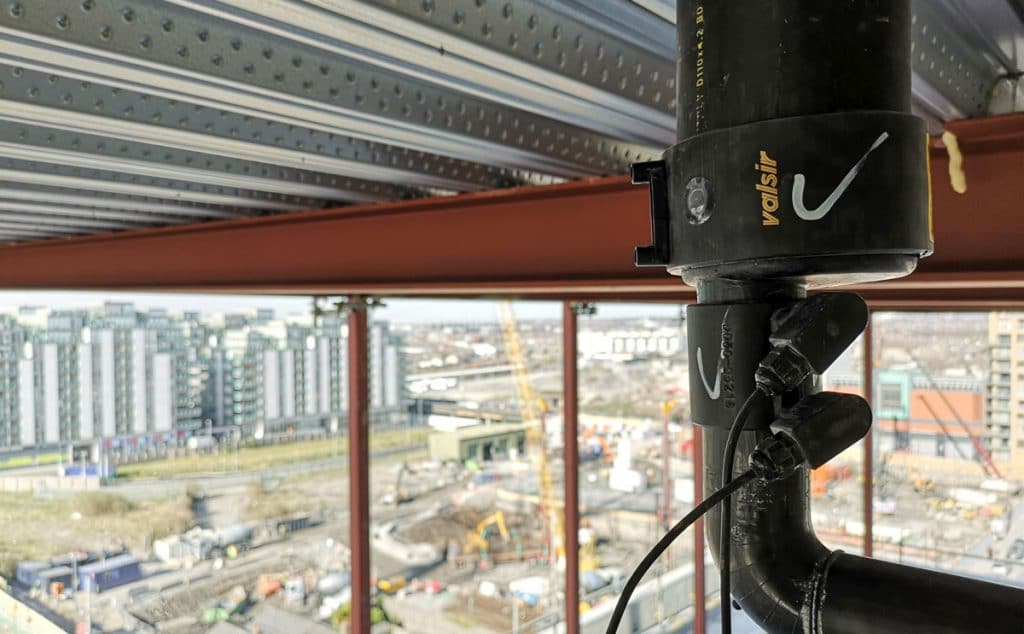
Outlets, collectors and downpipes are modelled in 3D BIM, and we prefabricate pipework off-site where it suits the job, so fewer joints are made on site above a live data hall or a finished production floor. We are also manufacturer-agnostic, trained to design and fit Valsir Rainplus, Hydromax and Blucher stainless-steel systems, so the specification follows your building’s risk profile rather than a single catalogue.
Installation, Maintenance and Upgrades
Capcon installs what it designs, sequencing the work with the roofers, steel erectors and M&E trades, and stays on afterwards to look after the system, because a blocked outlet on a Thai factory roof is a business interruption waiting for its storm. Debris builds up through the dry months, then the southwest monsoon arrives in mid-May and tests every outlet at once. A pre-monsoon inspection is cheap insurance, and our siphonic drainage service page lists the full maintenance options, from planned programmes and surveys to emergency call-outs and upgrades of older systems.
Where Siphonic Roof Drainage Works Best in Thailand
Siphonic roof drainage systems are particularly well-suited to the types of large-footprint buildings driving Thailand’s construction growth:
- Data centres and cloud infrastructure: AWS opened its Thailand cloud region in January 2025, and in November 2025 the Board of Investment approved four data centre projects worth 100 billion baht, totalling 376 MW. Water in a data hall is not an inconvenience. It is an outage.
- Electronics, EV and advanced manufacturing: The industrial estates of the Eastern Economic Corridor, concentrated in Rayong and Chonburi, keep adding printed circuit board plants and EV assembly halls. These are exactly the congested, high-value buildings where siphonic drainage outperforms gravity.
- Logistics and warehousing: Thailand’s ready-built warehouse stock reached 6.05 million square metres at 85.28% occupancy in Q2 2026. Big, flat roofs with few internal columns to hang downpipes from? Siphonic territory.
- Airports and transport infrastructure: AOT’s Suvarnabhumi expansion programme is worth more than 210 billion baht, with a long-term capacity target of 120 million passengers a year. Large roof spans and complex architecture make siphonic systems the natural choice.
- Pharmaceutical, commercial and convention buildings: Heavily serviced plants, malls and exhibition halls all benefit from fewer downpipes and freer ceiling voids.
Each siphonic rainwater system is custom-designed around the building’s use, location, roof geometry and discharge requirements, ensuring that roof drainage performance aligns with local rainfall data and the design storm criteria agreed for the project.
Supporting Thailand's Sustainability and Water Management Goals
Bangkok is rethinking storm water. The Bangkok Metropolitan Administration is redesigning its drainage system to a target of 100 mm of rain per hour, roughly double the intensity that can overwhelm parts of the city today. Public networks take years to upgrade, though. Your own roof and plot you can control now.
Thailand’s own green building standard rewards that thinking. Under TREES-NC, run by the Thai Green Building Institute, credit SL 4 (infiltration of storm water and flooding prevention) is worth 4 points and compares pre and post development runoff using the 2-year, 24-hour design storm. Credit WC 1 (water saving and water use efficiency) is worth 6 points, and its intent explicitly includes rainwater collection. Siphonic drainage does not earn these points on its own, but by channelling roof runoff into attenuation or rainwater harvesting storage, it can support a project’s case for both.
Many international developers in Thailand also pursue LEED, and the same strategy helps there. For data centres, where cooling makes water a critical operational resource, pairing siphonic drainage with rainwater harvesting can directly improve water efficiency.
How We Support Different Project Stakeholders in Thailand
For architects, we test early whether siphonic drainage suits the roof and Thailand’s monsoon rainfall, then place outlets and routes so the drainage stays out of sight and, just as importantly, away from the spaces your client can least afford to see wet. If you are the main or M&E contractor, expect coordinated, buildable drawings and factory-made pipe spools that reduce hours at height on crowded industrial estate sites, with our support through testing, commissioning and handover so the owner inherits a proven system. Consulting engineers and specifiers receive complete calculation packs, a second pair of eyes on other designers’ siphonic schemes and guidance on linking roof drainage to attenuation or harvesting, giving owners, insurers and tenants a clear account of how the roof copes with its design storm.
Our CPD “An Introduction to Siphonic Drainage” is approved by Engineers Ireland and certified by CPD UK, and can be delivered virtually or in person to project teams and design practices in Thailand.
Contact Our APAC Team
Capcon Engineering serves projects in Thailand from our APAC offices in Kuala Lumpur and Singapore:
Capcon Engineering, Kuala Lumpur
L12-6 Menara Sentral Vista, Kuala Lumpur
Phone: +6012 385 1975
Email: info@capconeng.com
Capcon Engineering, Singapore
141 Cecil Street, 04-05 Tung Ann Building, Singapore 069541
Phone: +6012 385 1975
Email: info@capconeng.com
Whether you are at the tender stage, early design or looking to upgrade an existing system, get in touch with your drawings and design criteria. Our siphonic drainage specialists will review the options and advise on the best approach for your project.
Siphonic Roof Drainage Experts
Meet Donnacha Tobin
Find out how we can design and supply a bespoke siphonic drainage solution for your next project by speaking directly with our Divisional Director.